
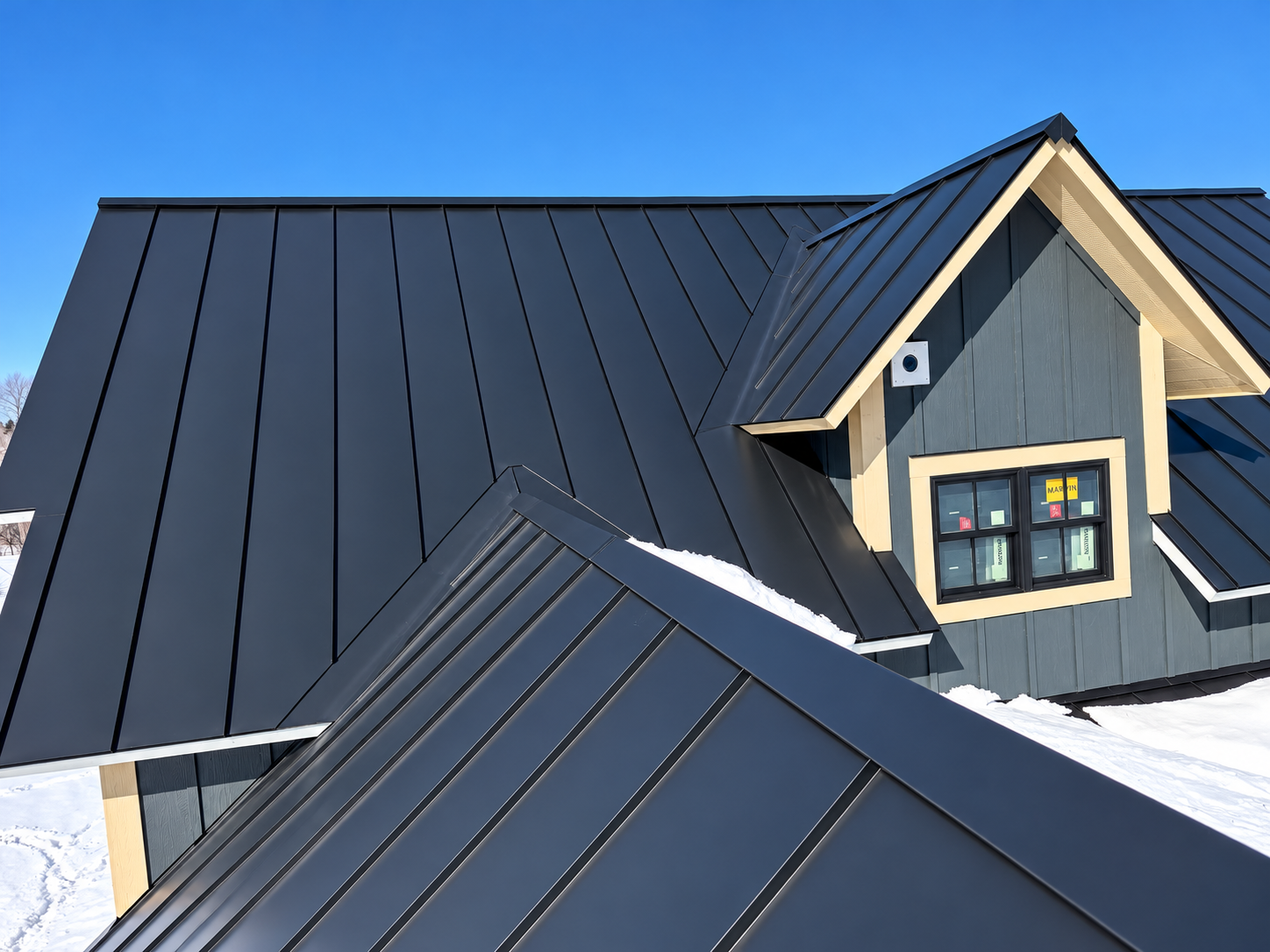
Cold-climate winters are hard on roofs. Heavy snow, repeated freeze-thaw cycles, and the constant threat of ice dams put roofing materials through a level of stress that milder climates simply don't. Metal roofs were built for exactly this, and here's why they consistently outperform asphalt shingles across the Northeast and anywhere winters bring months of snow.
Snow load and shedding
The first thing most people notice about metal roofs in winter is how they handle snow. The smooth, low-friction surface lets snow shed naturally rather than accumulate, which matters more than that might seem. Less snow load means less structural strain, and less pooled meltwater means less opportunity for ice to form at the eaves.
Ice dams and why metal handles them better
Ice dams are one of the most damaging winter roof problems in cold climates, and they're closely tied to your roofing material. They form when heat escapes through the roof, melts snow near the ridge, and that meltwater refreezes at the cold eaves — building up into a ridge of ice that traps water and forces it under shingles. Metal roofs have no granules or surface texture for ice to grip, so meltwater runs off cleanly rather than pooling and refreezing. Standing seam profiles like McElroy Metal's are especially effective here. Combined with proper attic insulation, metal dramatically reduces ice dam activity compared to asphalt.
Longevity that changes the math
Metal roofs typically last 40–70 years while asphalt shingles in a cold-climate region often need replacement every 15–20 years in part because the freeze-thaw cycle accelerates wear. Over the lifetime of a home, that difference can mean one metal roof installation versus three or four asphalt replacements. McElroy Metal products are backed by one of the strongest warranties in the industry — a reflection of how the material actually performs in the field over decades.
Energy efficiency through long heating seasons
A metal roof with proper insulation underneath retains heat more effectively than aging asphalt shingles, which thin and lose their insulating value over time. For homeowners in the Northeast (where homes might run heat for five to six months) that efficiency isn't a minor detail. It shows up in energy bills year after year, and it compounds over the lifespan of the roof in ways that are worth factoring into any comparison of upfront costs.
Not every home needs a metal roof — and asphalt shingles are still a solid, cost-effective option for many homeowners. But if you're replacing a roof and planning to stay in your home for the long haul, a cold-climate region makes a strong case for metal. The things that make winters hard on roofs are exactly the things McElroy Metal products are built to handle. McGarvey Group is proud to bring that product line to contractors and homeowners across Vermont as the region's authorized McElroy Metal distributor.